
Blog
How Reliable Transportation Is a Critical Part of Healthcare

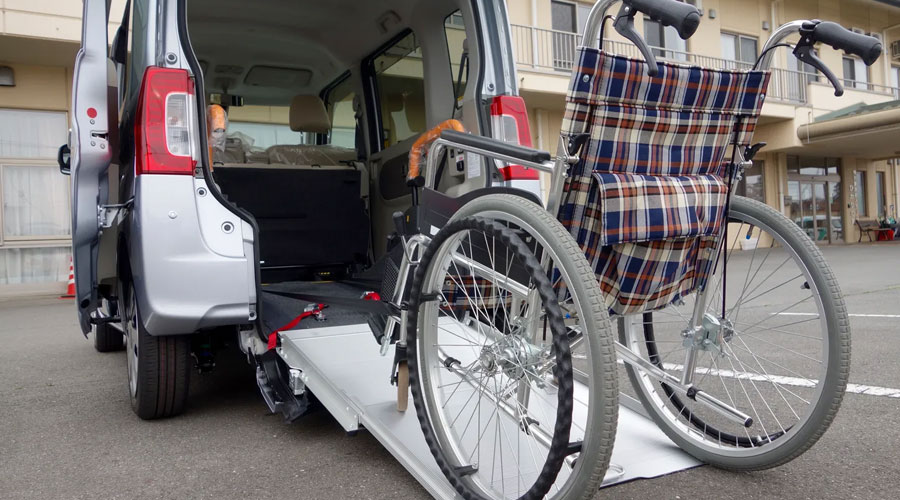
People don’t usually talk about transportation when they talk about healthcare. They talk about diagnoses, medications, and follow-up plans. Yet anyone who has watched a patient miss a dialysis session because a ride fell through knows the truth: care doesn’t begin at the clinic door. It begins much earlier. Sometimes, it begins with a phone call that never gets answered or a vehicle that never arrives.
And that’s where the system quietly breaks.
The Part of Healthcare No One Owns
Missed appointments are often described as a patient behavior issue. The framing is convenient and incomplete. Research tracking appointment adherence shows that transportation gaps rank among the top non-medical causes, alongside cost and caregiving strain. The downstream effects are well-documented: delayed treatment, worsening chronic conditions, and preventable hospitalizations. Readmission rates climb. Costs rise. Everyone agrees it’s inefficient, yet transportation remains oddly orphaned, sitting somewhere between social services and clinical care.
In the Bay Area, the problem sharpens. Dense geography meets uneven public transit access. Low-income seniors, people with mobility limitations, and patients without nearby family support face a puzzle every time a follow-up is scheduled. A puzzle with real consequences. Solving it requires more than a ride; it requires reliability that behaves like care.
Reliability Isn’t a Luxury, It’s a Clinical Variable
Healthcare professionals often talk about consistency in medication dosing or therapy schedules. Transportation rarely enters the same conversation, though it probably should. Dialysis, for example, doesn’t tolerate improvisation. Missed sessions compound fast. Hospital discharges are another fragile moment when patients are groggy, unsteady, and suddenly responsible for managing complex instructions. A chaotic transfer home can undo hours of careful clinical planning.
Here’s the quieter part: when transportation is steady, anxiety drops. Not dramatically, but enough. Enough that patients arrive calmer. Enough that caregivers stop bracing for contingency plans. Dignity, it turns out, has measurable effects, even if it doesn’t show up neatly in a chart.
The Ride as an Extension of the Care Team
Some systems have begun treating non-emergency medical transportation less like logistics and more like a partnership. The shift is subtle but meaningful. Familiar drivers. Predictable pacing. Time built in for wheelchairs and gurneys without sighs or shortcuts. It resembles how physical therapy or home health works—care delivered outside traditional walls, but still part of the continuum.
A nonprofit model fits naturally here, though it isn’t perfect. Limited resources can strain capacity, and scaling takes patience. Still, the alignment matters. When the mission centers on access rather than throughput, decisions look different. Routes are planned around patients, not the other way around. Waiting an extra minute to ensure someone is safely inside stops feeling inefficient.
That minute matters.
A Small Digression, but an Instructive One
Art conservators often talk about handling old paintings. You don’t rush. You don’t assume the canvas can take shortcuts. You move deliberately, because preservation is the point. The analogy isn’t exact, but it lingers. Vulnerability, whether human or historical, demands pacing. Transportation that respects this isn’t indulgent; it’s appropriate.
Reframing the Question
Is transportation a social service problem or a healthcare responsibility? The honest answer is probably both. Yet insisting on that distinction has kept the issue unresolved for decades. When transportation works, outcomes improve quietly. When it fails, the clinical system absorbs the shock, often at far greater cost.
Reliable transportation doesn’t replace medical care. It enables it. That may be the more accurate framing.
For patients and caregivers, the implication is simple: one less variable to manage can mean one more appointment kept, one more routine preserved. For discharge planners and clinic teams, the opportunity is to partner with transportation providers who understand that patient pacing can strengthen adherence without adding clinical burden.
Beyond the appointment lies the healthcare that makes it possible. Ignoring it hasn’t worked. Recognizing it, finally, might.