Blog
A Guide to Non-Emergency Medical Transportation (NEMT) for Bay Area Families

The hardest part isn’t the diagnosis. Most families say it’s the logistics, the steady drip of appointments, treatments, follow-ups, and unexpected schedule changes that turn daily life into something resembling a full-time coordination job. Somewhere between managing medications and tracking referrals, transportation quietly becomes the hinge point. Miss the ride, and everything downstream wobbles.
Experts who work with aging adults and chronically ill patients see this pattern repeatedly. Care plans look solid on paper. Outcomes make sense clinically. Then a single, very human obstacle intervenes: getting from home to care, safely and on time.
When Transportation Stops Being a Side Detail
Non-Emergency Medical Transportation, usually shortened to NEMT, occupies an unusual space in healthcare. It’s not urgent enough to involve an ambulance. It’s too specialized for taxis. And rideshare apps, despite their convenience, rarely accommodate wheelchairs, gurneys, or patients who need time rather than speed.
NEMT exists for those in-between moments. Wheelchair users. Patients undergoing dialysis several times a week. Seniors who no longer drive but still live independently. Individuals recovering from surgery who cannot safely sit upright in a standard vehicle. Research tracking access barriers shows transportation repeatedly surfacing as a deciding factor in whether care actually happens, not just whether it’s prescribed.
And prescribed care that isn’t accessed isn’t really care at all.
The Difference Between a Ride and a System
Families new to NEMT often assume all services are roughly the same. Vehicles, drivers, pick-up times. The assumption makes sense, and it’s wrong. Quality varies widely, and the differences show up fast.
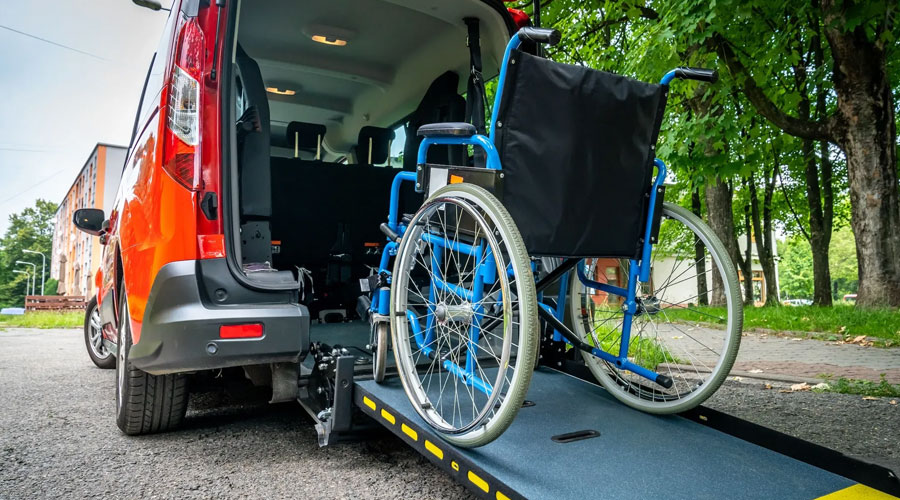
Safety is the obvious place to start. Proper securement of wheelchairs and gurneys isn’t intuitive; it’s taught, practiced, and reinforced. Training matters. Reliability follows close behind. A service that arrives inconsistently forces families to build backup plans, which defeats the purpose entirely. Consistency, experts note, functions like a stabilizer, especially for treatments that can’t be skipped.
Then there’s dignity. This part is harder to quantify. Patient pacing. No rushing. Drivers who wait until someone is fully inside, settled, and oriented. These moments don’t appear in operational metrics, but caregivers remember them.
Equipment capacity matters too. Not every provider handles gurney transport. Fewer still do it well.
A Brief Detour, But Stay with It
Urban planners sometimes talk about “desire paths,” the unofficial trails people carve through parks when formal walkways don’t match how humans actually move. Over time, those dirt paths often become the real sidewalks. NEMT works the same way. Families reveal, through repeated need, where systems fall short. The best services adapt to those paths instead of forcing everyone back onto routes that never quite fit.
The detour is relevant. It explains why rigid scheduling models fail vulnerable populations.
The Questions Families Always Ask
How far in advance should transportation be booked? As early as possible, especially for recurring treatments like dialysis, though experienced providers build flexibility into their schedules because care rarely runs exactly on time.
What if help is needed from the front door? A quality NEMT service plans for this. Door-to-door assistance isn’t an add-on; it’s part of safe transport.
Hospital discharge times, unpredictable by nature, cause anxiety for families and facilities alike. Some providers specialize in managing these gray windows, coordinating directly with staff to reduce waiting and confusion.
And the quieter question: what about non-medical trips that still matter? Grocery runs. Adult day programs. Visiting family. Research on aging in place consistently shows that these outings support mental health and independence, even though they don’t show up on a clinical schedule.
Yes, those trips count.
The Small Contradiction Worth Sitting With
Transportation is often framed as a cost center, something to minimize. Yet data tied to reduced hospital readmissions and improved treatment adherence suggest the opposite, that reliable NEMT saves resources over time. The contradiction isn’t really a contradiction. It’s a reminder that prevention rarely looks efficient at first glance.
One sentence matters here.
Dignity scales.
Where This Leaves Bay Area Families
The Bay Area’s geography magnifies everything: distance, traffic, appointment density, transit gaps. Navigating care without dependable transportation adds friction where none is needed. Knowledge helps. Knowing what NEMT is, who it serves, and what quality actually looks like allows families to choose support that aligns with their values.
Freedom Non-Emergency Transportation Services was founded to provide clarity in this space quietly, reliably, and with dignity at the center. Letting someone else handle the ride often frees families to focus on what matters most. Contact Freedom NETS to learn more or schedule your first transport.